
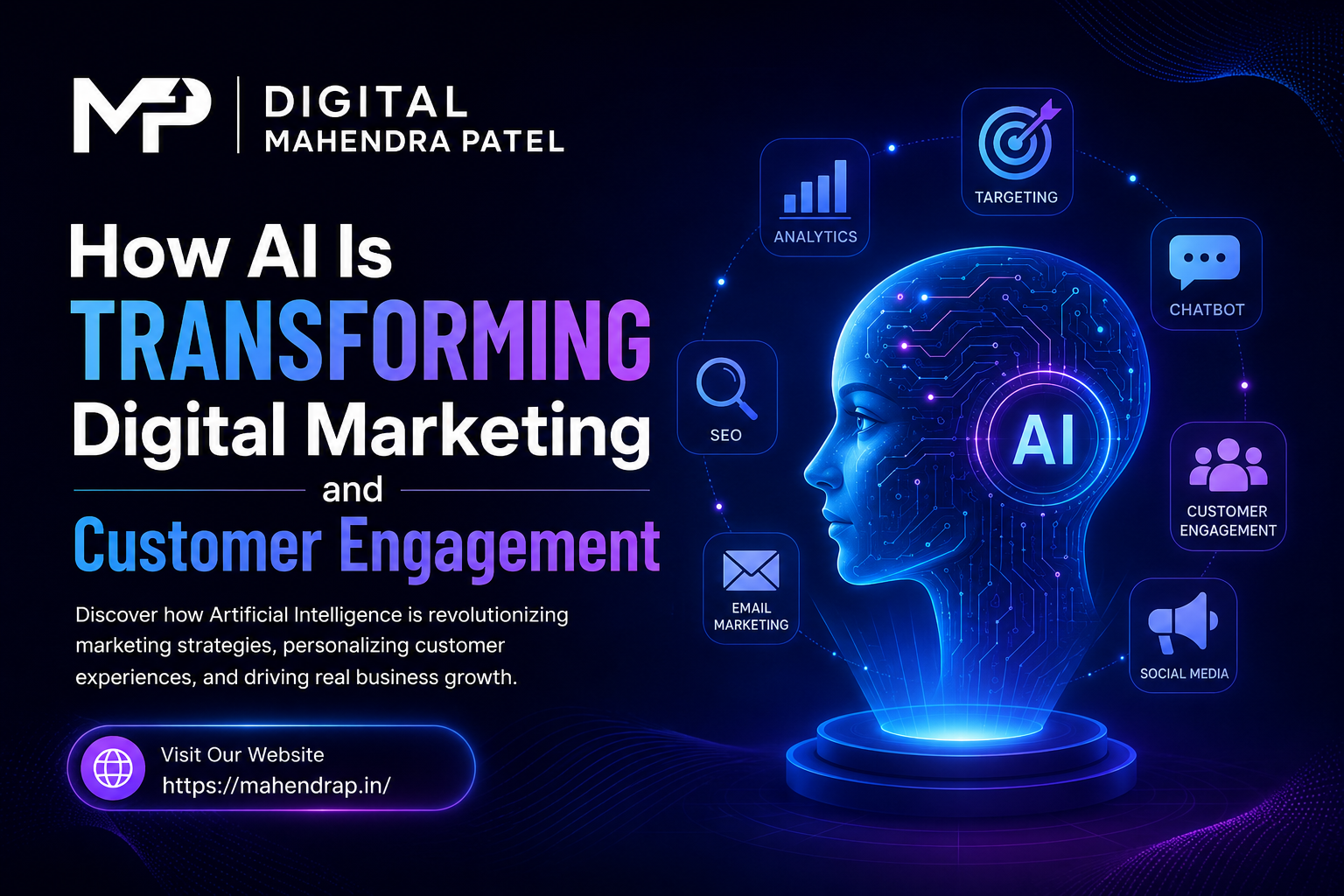
How AI Is Transforming Digital Marketing and Customer Engagement
Artificial Intelligence (AI) is no longer a futuristic concept reserved for technology giants. It has become a practical business tool that is reshaping the way companies market their products, communicate with customers, and build long-term relationships. From personalized recommendations on e-commerce websites to intelligent chatbots that answer customer queries instantly, AI is transforming digital marketing and customer engagement at an unprecedented pace.
In the past, marketers relied heavily on intuition, manual research, and broad audience targeting. Today, AI enables businesses to analyze vast amounts of data in real time, predict customer behavior, automate repetitive tasks, and deliver highly personalized experiences across multiple channels. This shift is not simply about efficiency; it is about creating more meaningful interactions between brands and customers.
In this comprehensive guide, we will explore how AI is changing digital marketing, the technologies driving this transformation, practical use cases, benefits, challenges, and the future of AI-powered customer engagement.
Understanding AI in Digital Marketing
Artificial Intelligence refers to computer systems that can perform tasks that normally require human intelligence, such as learning, reasoning, problem-solving, language understanding, and decision-making. In digital marketing, AI is commonly used through technologies such as:
- Machine Learning (ML): Learns patterns from data and improves over time.
- Natural Language Processing (NLP): Understands and generates human language.
- Predictive Analytics: Forecasts future customer actions.
- Computer Vision: Analyzes images and videos.
- Generative AI: Creates text, images, audio, video, and other content.
These technologies work together to help marketers make smarter decisions, automate workflows, and deliver personalized experiences at scale.
The Evolution of Digital Marketing
To appreciate AI’s impact, it helps to understand how digital marketing has evolved.
Traditional Digital Marketing
- Mass email campaigns
- Generic advertisements
- Basic website analytics
- Manual customer segmentation
- Limited personalization
AI-Driven Digital Marketing
- Hyper-personalized content
- Real-time customer insights
- Predictive targeting
- Automated campaign optimization
- Conversational customer experiences
The difference is significant. Instead of sending the same message to thousands of people, AI allows brands to send the right message to the right person at the right time.
AI-Powered Customer Data Analysis
One of AI’s greatest strengths is its ability to process enormous amounts of data quickly and accurately. Modern businesses collect data from websites, mobile apps, social media, CRM systems, email campaigns, and customer support interactions.
AI can analyze this data to identify:
- Customer preferences
- Purchase history
- Browsing behavior
- Engagement patterns
- Churn risk
- Lifetime value
For example, an online retailer can use AI to identify customers who are likely to purchase sports shoes within the next week and target them with relevant offers. This level of insight would be extremely difficult to achieve manually.
Personalization at Scale
Personalization is one of the most visible ways AI is transforming customer engagement. Consumers increasingly expect brands to understand their needs and provide relevant experiences.
Examples of AI Personalization
- Product recommendations
- Personalized email subject lines
- Dynamic website content
- Customized offers
- Personalized push notifications
- Tailored social media ads
Streaming platforms recommend movies based on viewing history, while e-commerce stores suggest products based on past purchases and browsing behavior. These recommendations are powered by AI algorithms that continuously learn from customer interactions.
Benefits of Personalization
- Higher conversion rates
- Increased customer satisfaction
- Better retention
- Higher average order value
- Stronger brand loyalty
Personalization is no longer a luxury; it has become a competitive necessity.
AI in Content Marketing
Content remains a core pillar of digital marketing, and AI is transforming how content is created, optimized, and distributed.
AI-Assisted Content Creation
Generative AI tools can help marketers:
- Generate blog outlines
- Write first drafts
- Create social media captions
- Produce email copy
- Generate ad variations
- Create image concepts
Human creativity is still essential, but AI significantly reduces the time required for research and drafting.
Content Optimization
AI can analyze top-performing content and suggest improvements such as:
- Better keywords
- Improved readability
- Optimal headline structure
- Content gaps
- Internal linking opportunities
This helps marketers create content that is more likely to rank well in search engines and engage readers.
Content Distribution
AI can determine the best time, channel, and audience for distributing content, increasing the likelihood of engagement.
AI and Search Engine Optimization (SEO)
SEO has become increasingly data-driven, and AI plays a major role in modern search optimization.
Keyword Research
AI tools can identify high-intent keywords, analyze search trends, and uncover long-tail opportunities.
Search Intent Analysis
AI helps marketers understand whether users are looking for information, products, comparisons, or local services, allowing content to be tailored accordingly.
Technical SEO
AI-powered tools can detect:
- Broken links
- Duplicate content
- Slow-loading pages
- Mobile usability issues
- Crawl errors
Voice Search Optimization
As voice assistants become more popular, AI helps marketers optimize content for conversational queries such as “best digital marketing agency near me.”
The result is a more strategic and user-focused SEO approach.
AI in Email Marketing
Email marketing remains one of the highest ROI digital marketing channels, and AI is making it even more effective.
Smart Segmentation
AI groups subscribers based on behavior, interests, and engagement levels rather than simple demographic data.
Predictive Send Time
AI determines when each subscriber is most likely to open an email.
Subject Line Optimization
AI can test and predict which subject lines are likely to generate higher open rates.
Automated Customer Journeys
AI triggers personalized emails based on actions such as:
- Cart abandonment
- Product views
- Downloads
- Purchases
- Inactivity
These automated workflows create timely and relevant customer interactions.
Chatbots and Conversational AI
Customer expectations have changed dramatically. People want immediate responses, and AI-powered chatbots help businesses provide 24/7 support.
What Modern Chatbots Can Do
- Answer frequently asked questions
- Recommend products
- Book appointments
- Process orders
- Collect leads
- Escalate complex issues to human agents
Advanced conversational AI can understand natural language and maintain context during a conversation, creating a more human-like experience.
Business Benefits
- Reduced support costs
- Faster response times
- Increased lead generation
- Improved customer satisfaction
- Round-the-clock availability
For small businesses, chatbots provide enterprise-level customer service without requiring a large support team.
AI in Social Media Marketing
Social media generates massive amounts of user data, making it an ideal environment for AI applications.
Audience Insights
AI analyzes audience interests, behaviors, and sentiment.
Content Recommendations
AI suggests topics and formats likely to perform well.
Social Listening
AI monitors brand mentions, reviews, and conversations to identify trends and customer concerns.
Automated Ad Optimization
AI adjusts targeting, bidding, and creative elements in real time to improve campaign performance.
This enables marketers to respond quickly to market changes and customer feedback.
Predictive Analytics and Customer Behavior
Predictive analytics uses historical data to forecast future actions. This is one of the most powerful AI applications in marketing.
Common Predictive Use Cases
- Purchase probability
- Customer churn prediction
- Upsell opportunities
- Lead scoring
- Demand forecasting
For example, a subscription business can identify customers who are likely to cancel and proactively offer incentives or support to retain them.
Predictive marketing shifts businesses from reactive to proactive customer engagement.
AI in Paid Advertising
Platforms such as Google Ads and Meta Ads rely heavily on AI to optimize advertising campaigns.
AI Capabilities in Advertising
- Automated bidding
- Audience targeting
- Ad creative testing
- Budget allocation
- Conversion prediction
Marketers define goals such as leads, sales, or website traffic, and AI continuously adjusts campaign settings to maximize results.
This reduces manual workload and often improves return on ad spend.
Customer Journey Mapping with AI
Customers interact with brands across multiple touchpoints: search engines, websites, social media, email, mobile apps, and customer support.
AI can connect these interactions to create a unified customer journey map.
Insights Gained
- Which channels drive conversions
- Where customers drop off
- Which messages influence decisions
- How long the buying cycle lasts
Understanding the full journey helps marketers allocate budgets more effectively and improve customer experiences.
AI and Customer Retention
Acquiring new customers is often more expensive than retaining existing ones. AI helps businesses strengthen retention strategies.
Retention Applications
- Loyalty program personalization
- Renewal reminders
- Usage-based recommendations
- Re-engagement campaigns
- Satisfaction monitoring
AI can detect early signs of disengagement and trigger personalized retention efforts before a customer leaves.
Voice, Visual, and Multimodal Search
Search behavior is evolving beyond text.
Voice Search
AI-powered assistants process spoken queries, making conversational optimization increasingly important.
Visual Search
Customers can search using images rather than keywords. AI identifies products within images and returns relevant results.
Multimodal Experiences
Users may combine text, voice, and images in a single interaction. Businesses that optimize for these experiences gain a competitive advantage.
AI in E-Commerce Customer Engagement
E-commerce businesses have been among the fastest adopters of AI.
Key Applications
- Personalized product recommendations
- Dynamic pricing
- Inventory forecasting
- Fraud detection
- Virtual shopping assistants
- Visual product search
AI helps create a shopping experience that feels curated for each customer, increasing both sales and satisfaction.
Measuring AI Marketing Success
Implementing AI is only valuable if it improves business outcomes. Important metrics include:
- Conversion rate
- Click-through rate
- Customer acquisition cost
- Customer lifetime value
- Email open rate
- Engagement rate
- Retention rate
- Return on ad spend
- Customer satisfaction score
AI can also provide deeper attribution analysis, helping marketers understand which activities contribute most to revenue.
Challenges of AI in Digital Marketing
Despite its benefits, AI adoption comes with challenges.
Data Privacy
Businesses must comply with regulations such as GDPR and other privacy laws while collecting and using customer data responsibly.
Data Quality
AI systems are only as good as the data they receive. Inaccurate or incomplete data can lead to poor decisions.
Bias
Algorithms may unintentionally reinforce biases present in training data.
Over-Automation
Excessive automation can make brand communication feel impersonal.
Skill Gaps
Marketing teams need new skills in data analysis, AI tools, and prompt engineering.
Successful AI adoption requires both technology and human oversight.
The Human Role in AI Marketing
A common misconception is that AI will replace marketers. In reality, AI is more likely to augment marketing professionals than replace them.
Humans Still Provide
- Brand strategy
- Creativity
- Emotional intelligence
- Ethical judgment
- Storytelling
- Relationship building
AI handles data processing and repetitive tasks, while humans focus on strategy and creativity. The most effective marketing teams combine both strengths.
Ethical AI and Trust
Customer trust is critical. Businesses should be transparent about how AI is used.
Best Practices
- Clearly disclose chatbot interactions
- Obtain consent for data collection
- Protect customer data
- Monitor algorithms for bias
- Provide human support options
Ethical AI practices strengthen brand reputation and customer confidence.
AI for Small Businesses
AI is not limited to large corporations. Affordable AI tools now allow small businesses to compete more effectively.
Practical Low-Cost AI Uses
- Chatbots on websites
- AI-generated social media posts
- Email automation
- Basic SEO optimization
- Customer review analysis
- Ad campaign recommendations
A local business can use AI to automate lead responses, schedule social posts, and improve search visibility without hiring a large marketing team.
Real-World Industry Applications
Retail
Personalized recommendations and dynamic promotions.
Healthcare
Appointment reminders and patient engagement campaigns.
Real Estate
Lead scoring and automated property recommendations.
Education
Personalized course suggestions and student communication.
Hospitality
AI-powered booking assistants and personalized travel offers.
Across industries, the common goal is delivering more relevant and timely customer experiences.
Future Trends in AI and Customer Engagement
AI technology is evolving rapidly. Key trends to watch include:
Generative AI Everywhere
Text, image, video, and audio generation will become integrated into everyday marketing workflows.
AI Agents
Autonomous AI agents may manage campaigns, optimize budgets, and coordinate marketing tasks with minimal human intervention.
Emotion AI
Systems will increasingly analyze tone, sentiment, and emotional cues to improve interactions.
Hyper-Personalization
Experiences will adapt in real time based on context, location, device, and behavior.
Privacy-First AI
Future AI solutions will rely more on consent-based and first-party data strategies.
Businesses that prepare for these trends will be better positioned for long-term growth.
A Step-by-Step AI Adoption Roadmap
Step 1: Define Goals
Decide whether the priority is leads, sales, retention, or customer support.
Step 2: Audit Data
Ensure customer data is accurate and accessible.
Step 3: Start Small
Begin with one use case such as email automation or a chatbot.
Step 4: Measure Results
Track KPIs before and after implementation.
Step 5: Train Your Team
Develop AI literacy within the marketing team.
Step 6: Scale Gradually
Expand AI applications based on proven results.
This phased approach reduces risk and improves adoption success.
Conclusion
Artificial Intelligence is fundamentally transforming digital marketing and customer engagement. It enables businesses to understand customers more deeply, deliver personalized experiences at scale, automate complex processes, predict future behavior, and engage customers through intelligent conversations.
The impact of AI extends across every major marketing channel, including SEO, content marketing, email marketing, social media, paid advertising, customer support, and e-commerce. Companies that embrace AI thoughtfully can improve efficiency, increase conversions, strengthen customer relationships, and gain a significant competitive advantage.
However, technology alone is not enough. Successful AI-driven marketing requires high-quality data, ethical practices, human creativity, and a clear customer-centric strategy. The future belongs to businesses that use AI not merely to automate marketing, but to create more relevant, helpful, and human customer experiences.
As AI continues to evolve, one thing is clear: digital marketing is entering a new era where intelligent systems and human creativity work together to build stronger brands and deeper customer relationships. Businesses that start adapting today will be the ones leading tomorrow’s digital economy.